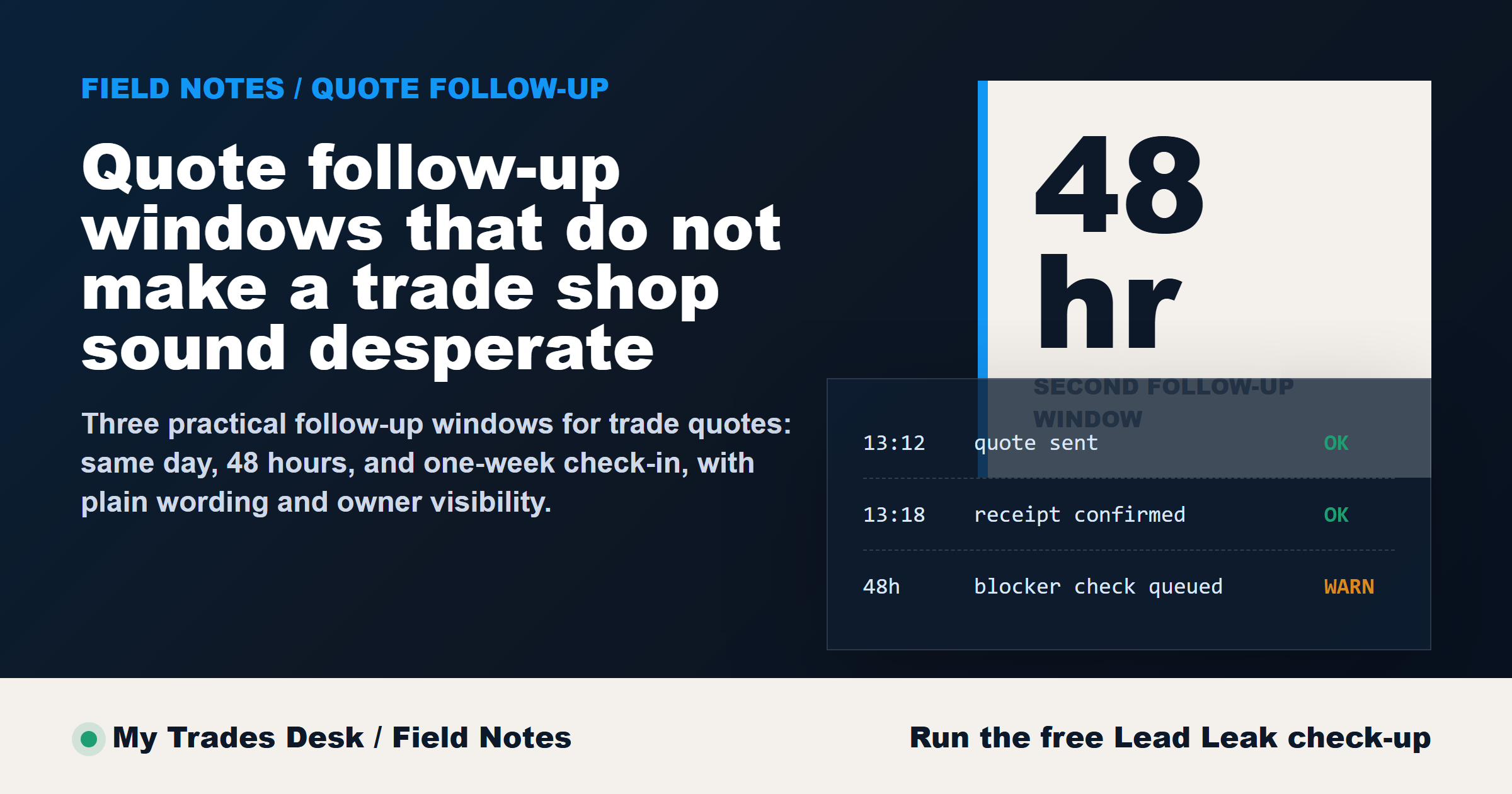
A plumbing shop sends a quote at 1:12 pm. The homeowner opens it at 1:18 pm, gets pulled into work, and never replies. By Friday, the owner has no idea whether the quote was too high, the timing was wrong, or the homeowner simply forgot.
That is not always a sales problem. Often it is a follow-up timing problem.
A good quote follow-up setup should feel useful, not needy. The message should help the customer make the next decision and help the shop see what is blocking the job.
First, separate estimate from decision
Sending the estimate is not the same as getting a decision.
For trade shops, a quote usually stalls for one of four reasons:
- the customer did not see it
- the scope is unclear
- the timing is not right
- the price needs a human conversation
If the follow-up treats all four the same, it sounds generic. A better path uses three windows: same day, 48 hours, and one week.
Same day: confirm they received it
The same-day message should be light.
Do not sell. Do not add urgency. Do not ask if they are ready to move ahead five minutes after the quote lands.
A useful same-day check sounds like this in plain language: just confirming the quote came through, and asking whether anything is missing.
That does two things. It catches email delivery issues, and it gives the customer an easy way to ask for a missing detail before the quote gets cold.
For a shop with a dispatcher, this can be a simple text or email. For an owner-run shop, it should land in one reply inbox so the owner is not checking email, texts, and the estimating app separately.
48 hours: ask one useful blocker question
The second window is where the message earns its keep.
At 48 hours, ask one blocker question: is the hold-up timing, scope, price, or another quote?
That question is useful because each answer has a different next step. Timing may need a schedule option. Scope may need a call. Price may need clarification, not discounting. Another quote may mean the owner should decide whether to follow up or let it go.
Do not ask five questions in one message. The goal is not to interrogate the customer. The goal is to understand why the quote has not moved.
One week: close the loop without chasing
The one-week note should be calm.
By then, the shop can say it is checking whether the customer still wants help or whether the file should be closed for now. That gives the homeowner a graceful way to reply without feeling chased.
For smaller jobs, closing the loop matters because the owner stops carrying a mental list of maybe-quotes. For larger jobs, it keeps the conversation tidy and creates a clear moment for a human call if the customer is still interested.
If the customer replies with a pricing question, do not let the automation guess. Route that to the owner or estimator.
Put replies in one place
Quote follow-up breaks when replies scatter.
If one reply lands in email, another in SMS, and another inside a CRM note, the owner starts piecing the story together from memory. That is how a warm quote gets treated like a cold lead.
Pick the reply owner before turning anything on. It might be the dispatcher, estimator, office admin, or owner. The message channel matters less than the ownership.
The first version should answer three questions:
- Who sees the reply?
- How fast do they answer?
- When does the owner get pulled in?
If those questions are unclear, the follow-up setup will create more noise than revenue.
What not to automate
Do not automate price negotiation. Do not promise availability the calendar cannot support. Do not send the same reminder to every type of quote.
A drain repair, panel upgrade, furnace replacement, and bathroom rough-in do not need identical follow-up wording. Start with the common path, then tune by job type once the shop sees enough replies.
The first goal is smaller: stop quotes from sitting unseen and give the owner a clear answer on what is blocking the decision.
Run the Missed Call audit if you want to see where follow-up fits in your shop's numbers. It takes about 30 seconds and sends the report to your inbox.