It is 6:42 pm. A homeowner calls a trade shop after work. The owner is driving. The tech is loading the truck. The call rolls to voicemail.
The next morning, the number is still in the phone log. Nobody is sure whether the caller needed a quote, a repair, a booking change, or a callback.
That is how real work starts leaking.
Not because the shop is bad at the trade. Not because the lead was low quality. The leak happens because the first reply is unclear.
Before spending more money to bring in new leads, look at the leads already trying to reach you.
Start with the calls you already missed
The phone log is usually more honest than the dashboard.
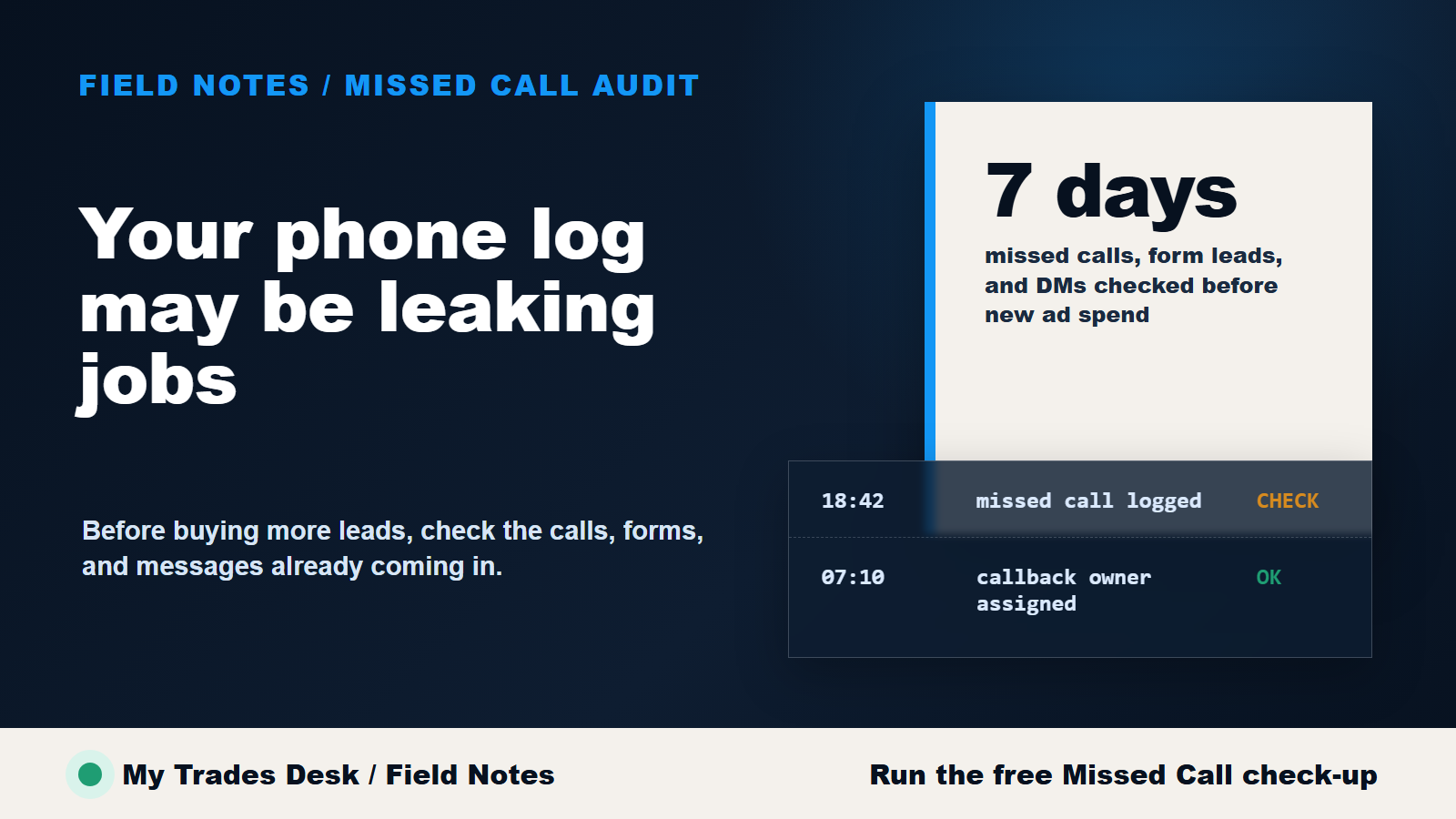
Open the last seven days and look for the calls that came in while the shop was busy, closed, on the road, or already speaking with someone else. Do not start by judging the whole business. Start with the calls that had no clean path.
For each missed call, ask four simple questions:
- Did anyone call back?
- Did the caller get a text?
- Was the reason for the call captured?
- Was the next step written down anywhere?
If the answer is no, you have found a leak candidate.
The point is not to shame the team. Trades work is noisy. Calls come in while people are under sinks, in attics, on ladders, in driveways, and between jobs. The system has to respect that reality.
Separate junk calls from real work
Not every missed call is a lost job.
Some calls are spam. Some are suppliers. Some are wrong service area. Some are customers asking for something your shop does not do.
That is why the phone-log check should separate three buckets:
- not a fit
- unclear
- likely real work
The "unclear" bucket matters most. Those are the calls where nobody knows what happened. A caller may have needed a quote, a repair, a booking change, or a simple answer. If the shop never asks, the call stays invisible.
This is also why automation should not pretend every missed call is money. A better setup helps the owner see which calls deserve a reply, not inflate the number to make the problem look bigger.
Check the first reply
The first reply does not need to be fancy.
It needs to happen quickly, sound human, and ask for the next useful detail.
For a missed call, that might be:
> Sorry we missed you. What were you hoping to book or ask about?
For a quote request, it might be:
> Got your request. What city is the job in, and is this urgent or flexible?
For a booking change, it might be:
> We saw your message. Are you trying to reschedule, cancel, or add a note for the tech?
The wording can change by trade. HVAC, plumbing, roofing, electrical, garage doors, cleaning, landscaping, and general contracting do not all need the same script.
The rule is simpler: ask one useful question and move the lead toward a human next step.
Put the next step in one place
Follow-up breaks when replies scatter.
One reply lands in voicemail. Another lands in Facebook Messenger. Another comes through a website form. Another sits in a text thread on the owner's phone.
By the end of the week, nobody has the full story.
The first version does not need a complicated system. It needs one place where the owner or dispatcher can see:
- who called
- what they needed
- how urgent it sounded
- who owns the reply
- what happens next
That can be a CRM, a shared inbox, a simple sheet, or the system you already use. The tool matters less than the ownership.
If a lead does not have an owner, it becomes a guess.
Do not buy more leads before this
More ads will not fix a broken first reply.
If the shop misses calls today, new paid traffic can make the leak louder. More forms arrive. More DMs pile up. More quote requests wait for a callback. The owner feels busy, but the path is still loose.
Fix the handoff first.
Start with the channel that already produces real inquiries. For some shops, that is the phone. For others, it is the website form, Facebook page, Google Business Profile, or referrals landing in text messages.
Pick one. Watch it for a week. Fix the first reply before adding another source.
A simple 20-minute phone-log check
Here is the quick version.
Open the last seven days of calls and messages. Mark every missed call, form lead, and DM as one of three things:
- not a fit
- unclear
- likely real work
Then write down what happened after each likely real inquiry.
Did someone reply? How long did it take? Who owned it? Was the next step clear?
If you find the same gap three times, start there. Not with a full rebuild. Not with five tools. Just the first leak.
For a small shop, that first fix might be missed-call text-back. For a busier shop, it might be AI receptionist overflow, callback summaries, quote follow-up, or booking reminders.
The right answer depends on the phone log.
FAQ
Does every missed call need automation?
No. Some missed calls are spam, wrong-fit, or already handled. The useful question is whether real quote requests are going unanswered or unclear.
Should the first fix be AI receptionist or text-back?
It depends on what the log shows. If callers hang up and never leave context, AI receptionist overflow may help. If callers call once and move on, missed-call text-back may be the smaller first step.
What should a trade owner check before spending on ads?
Check whether existing calls, forms, and DMs receive a clear reply. Paid traffic works better when the first reply path is already clean.
Where should I start?
Start with the free Missed Call check-up. It asks a few practical questions and shows where the first gap may be.