A plumbing owner gets the first after-hours call at 6:42 pm. The family has water under the sink, but the shutoff valve is already closed. Ten minutes later another caller wants a quote for a bathroom rough-in. At 11:18 pm, a no-heat call comes through from an older homeowner.
Those three calls should not all hit the owner the same way.
After-hours routing works when the shop writes the rule before the phone rings: what gets a wake-up, what gets a useful reply, and what waits for the morning desk. For a plumbing shop, the goal is not to sound open all night. The goal is to keep real emergencies visible without turning every evening question into an owner interruption.
Separate true emergencies from next-morning work
Start with two lanes, not twelve.
Lane one is urgent: active leak, no heat when the shop handles that work, sewer backup, no water, or another situation the owner already agrees deserves immediate attention. Lane two is everything else: quote requests, faucet questions, non-urgent repairs, reschedules, and jobs that need office review before booking.
The first mistake is asking the phone setup to make a judgement the shop has never written down. If the rule lives only in the owner's head, the evening setup will either wake the owner too often or hold back a call that needed a person.
Write the wake-up rule in plain shop language. Use examples from last month's calls if you have them. If the office cannot explain the rule in 30 seconds, tighten it.
Write the first reply before the phone rings
The first after-hours reply should not pretend the truck is already on the way unless that is true.
A better first message does three jobs: confirms the caller reached the shop, asks what happened, and sets the right expectation. For non-urgent work, that expectation can be simple: the team reviews messages when the desk opens. For urgent issues, the message should collect the basics and alert the owner or on-call person.
Keep it short. The caller should know what to do next without reading a long policy paragraph.
For a plumbing shop, the useful first details are usually service type, whether water is actively running, address area, and callback number. Photos can help later, but they are not the first gate.
Send the morning summary where work starts
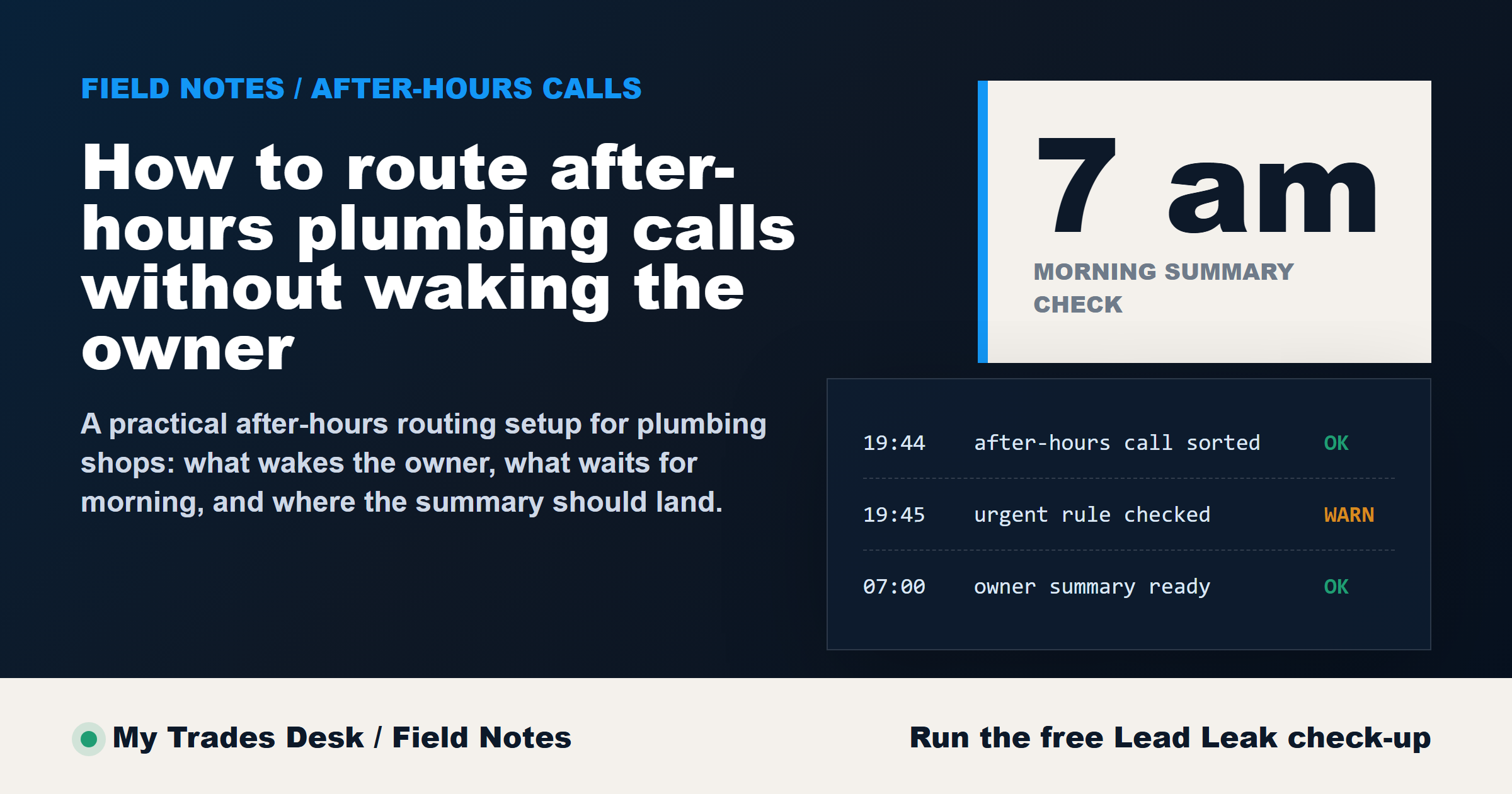
An after-hours setup fails if the summary lands somewhere nobody checks at 7 am.
Pick the first morning inbox. That might be the dispatch email, the business texting inbox, the booking board, or the owner's SMS thread. The CRM can still hold the history, but the morning action needs to land where the day actually starts.
The summary should be readable in one glance:
- caller name and number
- service need
- urgency lane
- location area
- recommended next step
If the office has to open three tabs to understand the call, the setup is still too heavy.
Keep the owner wake-up rule narrow
The owner should not wake up for every after-hours message. That sounds like coverage, but it turns into alert fatigue fast.
Use a narrow wake-up rule for the first version. Active leak with no shutoff, sewer backup, urgent no-water call, or another shop-approved emergency can alert the owner. Quote requests, tap replacements, and standard service questions can wait for the morning summary.
A narrow rule is easier to inspect. After seven days, the owner can read the after-hours log and ask two questions: what woke me up that should not have, and what waited that should not have.
That review beats guessing.
Check it after seven days
Do not judge the setup by whether it feels calmer on night one. Look at the log after one week.
Use four checks:
- How many after-hours calls came in?
- How many were marked urgent?
- How many woke the owner?
- How many morning summaries were handled before the day got away?
If the urgent lane catches everything, the rule is too wide. If the morning summaries sit untouched until lunch, the routing is landing in the wrong place. If callers reply with confusion, the first message needs simpler wording.
One caveat before you turn it on
After-hours routing is not a promise of 24/7 plumbing service. If the shop does not dispatch overnight, the wording should say that clearly. The setup should protect the owner, respect the caller, and keep real emergencies visible. It should not imply a service level the shop cannot honour.
Start with the calls you already understand. Keep the first version small enough to review line by line. Once the wake-up rule and morning summary hold for a week, then decide whether to add missed-call text-back, AI receptionist overflow, or booking handoff on top.
If you want to see where after-hours calls fit into your own missed call, run the Missed Call audit. It takes about 30 seconds and sends the report to your inbox.