An HVAC owner opens the shop phone at 6:57 am and sees five overnight misses. One caller says the furnace stopped at 10:12 pm. Another wants a spring maintenance quote. A third left no voicemail but called twice.
If all five sit in the same pile, the day starts with guessing.
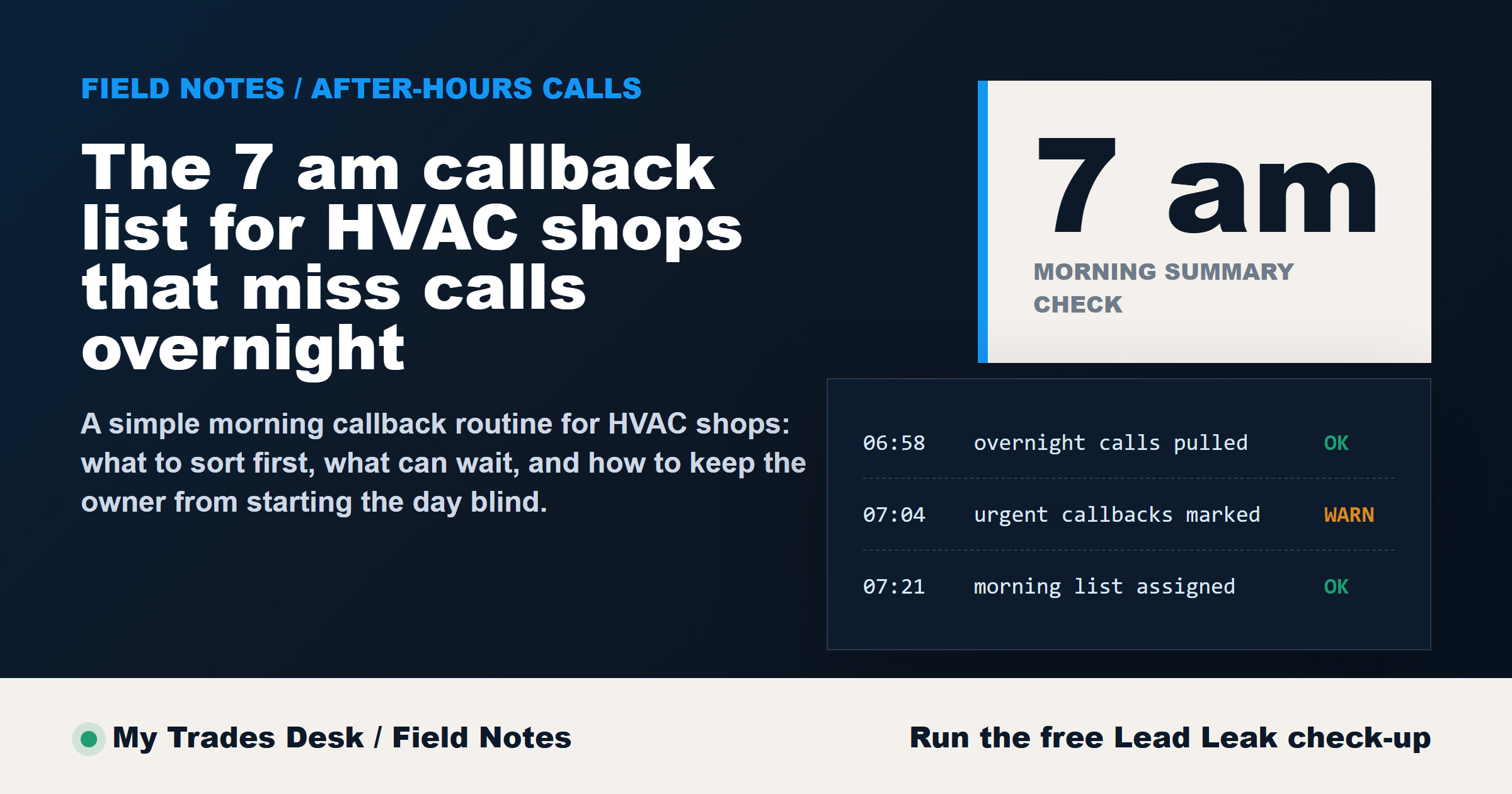
The fix is not a bigger dashboard. It is a 7 am callback list the office or owner can scan before the first truck rolls. The list should say who called, what they needed, how urgent it sounds, and who owns the first reply.
Start with the overnight call log
Do not start with the CRM. Start with the places homeowners actually used after hours: phone log, voicemail, text inbox, web form, and Google message.
For the first version, the list only needs five fields:
- caller name if available
- callback number
- service need
- urgency lane
- next step owner
That is enough to stop the lead from disappearing. The CRM can still hold the record later, but the morning action needs to be visible before the owner is already driving.
Sort by urgency before arrival time
The oldest call is not always the first call back.
For HVAC, a no-heat call from an older homeowner deserves a different morning path than a tune-up request. A no-cool call during a heat wave gets treated differently from a quote question for next month.
Use three lanes for the first week:
- urgent callback
- normal service callback
- estimate or admin follow-up
Do not overbuild the labels. If the person opening the list has to interpret nine statuses before coffee, the setup is already too heavy.
Send one morning summary
The owner should not wake up to scattered alerts from five apps.
Send one morning summary to the place the shop checks first. For a one-person shop, that may be SMS. For a shop with dispatch, it may be email or the booking board. The point is not the tool. The point is that one person can see the whole overnight picture.
A useful summary reads like this:
- 5 overnight calls
- 2 likely urgent
- 1 quote request
- 2 need basic callback
- first owner action: call Maria back before 7:30 am
That is a working list, not a report.
Use a two-hour cleanup window
The first two hours of the day matter because yesterday's leak becomes today's backlog.
Set a simple rule: every overnight item gets a first action by 9 am. That does not mean every job is booked. It means every caller got a reply, a callback attempt, or a clear next step.
If a caller gave enough detail, the office can reply with the next available time or ask one missing question. If the issue sounds urgent, call. If the caller only left a number, call once and send one short text.
The list should shrink before the day gets noisy.
What to check after seven days
After one week, do not ask whether the list felt helpful. Read the actual list.
Check four numbers:
- how many after-hours calls came in
- how many were marked urgent
- how many had a first action by 9 am
- how many were still unclear after the first reply
If half the list is still unclear, the after-hours intake needs one better question. If urgent calls are mixed with quote requests, the sorting rule is too vague. If the owner cannot find the list, it is landing in the wrong inbox.
One caveat before you call this solved
A morning callback list does not make the shop 24/7. If the team does not dispatch overnight, the message should say that plainly. Homeowners can handle honest expectations. What hurts trust is silence followed by a rushed callback hours later.
Start with one week. Keep the list small enough to inspect. Then decide whether missed-call text-back, AI receptionist overflow, or a fuller lead recovery system belongs on top.
Run the Missed Call audit if you want the same morning math against your shop's call volume. It takes about 30 seconds and sends the report to your inbox.